
 EN
EN
WHAT ARE YOU LOOKING FOR?
Borosilicate glass vs Pyrex is a widely discussed comparison in cookware, laboratory glassware, and modern drinkware manufacturing because both materials are associated with heat resistance, but they differ in composition, thermal behavior, and manufacturing standards.
Understanding this difference is important for manufacturers and product developers because material selection directly affects durability, thermal stability, and long-term performance in real-world applications. Today, both materials are used across different borosilicate glass products, but they are not structurally identical.
Topglass operates within global glass manufacturing systems where material selection is based on performance requirements rather than branding, especially in industrial and B2B applications.
The borosilicate glass definition refers to a type of glass made from silica and boron trioxide, engineered to reduce thermal expansion and improve resistance to thermal shock.
It typically has a thermal expansion coefficient of around 3.3 × 10⁻⁶/K, allowing it to withstand rapid temperature changes without cracking easily.
Because of this property,
borosilicate glass is widely used in:
Laboratory equipment
Heat-resistant cookware
Drinkware applications
Industrial glass systems
Its key advantage is predictable performance under thermal stress conditions.
Pyrex is a brand originally associated with borosilicate glass, but in many modern markets, Pyrex products are often made from tempered soda-lime glass instead.
This material shift is one of the key reasons the comparison borosilicate glass vs Pyrex remains relevant today.
While both materials are designed for heat resistance,
they differ in:
Base composition
Thermal shock behavior
Manufacturing process
The main difference lies in how each material handles temperature stress.
Borosilicate glass is engineered for low thermal expansion, while modern Pyrex relies more on tempering to improve mechanical strength.
Key differences include:
Borosilicate glass handles rapid temperature changes more effectively
Pyrex may offer higher impact resistance in some cases
Borosilicate maintains stability under repeated thermal cycling
Pyrex performance depends on its regional material formulation
These differences are critical when selecting materials for borosilicate glass products used in technical or high-temperature environments.
In industrial production, borosilicate glass manufacturers often prefer borosilicate materials when thermal stability and consistency are required.
This is because borosilicate glass:
Maintains structural integrity under repeated heating and cooling
Reduces failure risk in high-temperature use environments
Provides consistent batch-to-batch performance
For manufacturers, predictability in material behavior is more important than brand association.
Borosilicate glass products are widely used across consumer and industrial sectors due to their durability and thermal resistance.
Typical applications include:
Laboratory glassware
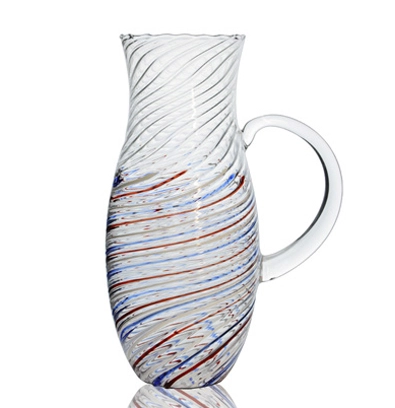
Drinkware and pitchers
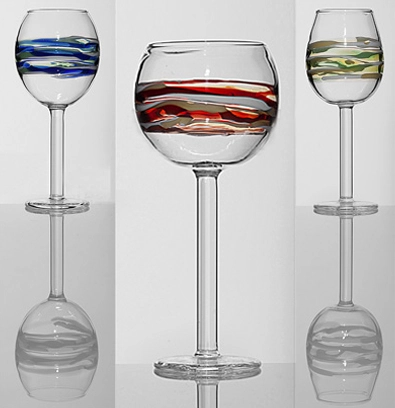
Wine glasses and beverage containers
Heat-resistant kitchen systems
These applications rely on stable performance under repeated temperature changes and daily use conditions.
The practical difference between borosilicate glass vs Pyrex becomes most visible in temperature-changing scenarios.
For example:
Hot liquid poured into cold glass
Refrigerator-to-oven transitions
Dishwasher thermal cycles
Repeated heating and cooling use
Borosilicate glass generally performs more consistently under these conditions due to its lower thermal expansion behavior.
Professional borosilicate glass manufacturers ensure product reliability through strict process control.
Key manufacturing stages include:
Raw material purification
Furnace temperature stabilization
Annealing to release internal stress
Final inspection for structural consistency
These steps ensure predictable performance in final glass products. Topglass follows these manufacturing principles to maintain stable quality across global production systems.
| Feature | Borosilicate Glass | Pyrex (Modern Soda-Lime) |
|---|---|---|
| Base material | Silica + boron trioxide | Soda-lime glass (often tempered) |
| Thermal expansion | Low (~3.3 × 10⁻⁶/K) | Higher |
| Thermal shock resistance | High | Moderate |
| Impact resistance | Moderate | Higher |
| Industrial consistency | High | Varies |
| Laboratory standard use | Yes | Limited |
This comparison shows why borosilicate glass remains the preferred material in technical applications.
Topglass is a professional manufacturer specializing in borosilicate glass products, focusing on material consistency and scalable production for global markets.
By controlling borosilicate formulations and production conditions, Topglass ensures stable performance across different glassware applications.
Each product undergoes testing for:
Thermal resistance stability
Structural integrity under repeated use
Surface and optical consistency
This ensures reliable performance across industrial and consumer applications.
It depends on the application, but borosilicate glass generally performs better under thermal shock conditions.
Some regions shifted to tempered soda-lime glass for cost and impact resistance reasons.
It has low thermal expansion, allowing it to handle rapid temperature changes.
Yes, especially in laboratories and industrial glass systems.
Yes, they are widely used due to stability under heat changes.
They focus on material purity, thermal control, and production consistency.
The difference between borosilicate glass vs Pyrex is primarily based on material composition and thermal behavior rather than branding alone. Borosilicate glass offers greater thermal stability due to its low expansion properties, while modern Pyrex varies depending on its manufacturing formulation.
In industrial applications, borosilicate glass remains a key material in modern glass systems, and manufacturers like Topglass continue to apply strict production standards to ensure consistent quality across global glass manufacturing.