
 EN
EN
WHAT ARE YOU LOOKING FOR?
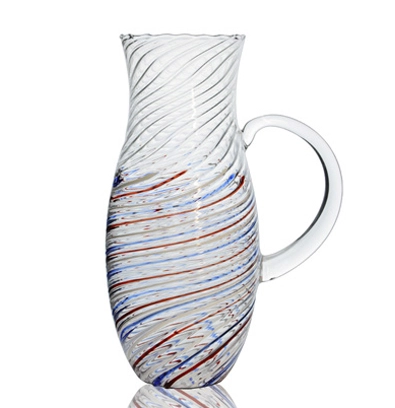
A borosilicate glass pitcher is a drinkware container made from borosilicate glass material designed for water, tea, and cold or hot beverages. It is widely used in home kitchens and commercial beverage environments because of its chemical stability, heat resistance, and long-term durability.
In global supply chains, many of these products are produced through borosilicate glass china manufacturing systems, where scalable production and controlled quality standards support international demand. Professional borosilicate glass manufacturers such as Topglass focus on producing stable, clear, and safe glass pitchers for global users.
A borosilicate glass pitcher is a liquid container made from borosilicate glass, a material composed primarily of silica and boron trioxide, known for its low thermal expansion and high resistance to thermal shock.
This material can typically withstand temperature changes of around 120–150°C, which makes it suitable for both hot and cold beverage use. Compared with standard glass, it is less likely to crack under sudden temperature shifts.
Because of this stability, borosilicate glass pitcher products are widely used for drinking water, iced tea, fruit-infused water, and hot beverage preparation.
The safety of a borosilicate glass pitcher comes from its chemical stability and non-reactive surface structure. Unlike plastic containers, borosilicate glass does not release BPA or absorb odors over time. Unlike low-quality glass, it maintains structural stability under repeated heating and cooling cycles.
In daily use, this means:
Water remains clean and odor-free
No chemical interaction with beverages
Stable performance under temperature changes
These properties make it a reliable choice for long-term kitchen use.
One of the key reasons borosilicate glass manufacturers use this material is its low thermal expansion coefficient of approximately 3.3 × 10⁻⁶/K. This allows borosilicate glass to handle rapid temperature changes without breaking easily.
Compared to soda-lime glass:
Higher resistance to thermal shock
Better structural stability
Longer service life in daily use
This makes it especially suitable for pitchers used in both hot and cold beverage preparation.
China is one of the major global manufacturing hubs for glassware, especially in borosilicate glass china production regions where large-scale industrial systems support international supply chains.
In these production bases:
Daily output can reach thousands of units depending on product complexity
Precision forming ensures uniform wall thickness
Quality control systems help maintain defect rates typically below 3% in high-end production lines
This allows global buyers to access consistent and scalable borosilicate glass products.
Professional borosilicate glass manufacturers focus on three key factors: material purity, thermal resistance, and structural consistency.
Core manufacturing processes include:
High-temperature forming for stable structure
Annealing to reduce internal stress
Thermal shock testing for real-use simulation
For example, a borosilicate glass pitcher may be tested by alternating between hot and cold water cycles to ensure durability in real kitchen conditions.
Topglass follows these manufacturing standards to ensure each product meets international safety and quality expectations.
A borosilicate glass pitcher is widely used in both household and commercial environments because of its versatility.
Common uses include:
Drinking water storage
Cold brew coffee and iced tea preparation
Fruit-infused water serving
Light hot beverage handling
Its transparency also allows users to visually monitor beverage freshness, which improves usability in modern kitchens. Unlike plastic pitchers, it does not cloud over time or retain residue after repeated use.
| Feature | Plastic Pitcher | Soda-Lime Glass Pitcher | Borosilicate Glass Pitcher |
|---|---|---|---|
| Chemical stability | Medium | High | Very high |
| Odor retention | High | Low | Very low |
| Thermal resistance | Low | Medium | High (120–150°C) |
| Durability | Medium | Medium | High |
| Safety for daily use | Lower | Moderate | High |
| Lifespan | Short | Medium | Long |
This comparison shows why borosilicate glass is widely preferred for safe and long-term kitchen use.
Topglass is a professional manufacturer specializing in borosilicate glass drinkware, including high-quality glass pitchers for global markets.
Its production system includes precision molding, controlled annealing processes, and strict quality inspection to ensure consistency in every batch. Each borosilicate glass pitcher is tested for thermal resistance, clarity, and structural integrity before shipment.
Operating within mature borosilicate glass china manufacturing systems, Topglass ensures scalable production while maintaining stable product quality for international buyers.
Yes, it is chemically stable and does not release harmful substances into beverages.
Because it is BPA-free, odor-resistant, and does not react with liquids.
Yes, they can withstand temperature changes of around 120–150°C.
It is more durable than standard glass, but still requires normal handling care.
Because it has large-scale manufacturing capacity and stable industrial systems.
Material quality, thermal resistance testing, and production consistency.
A borosilicate glass pitcher is considered a safe and reliable choice for daily use due to its chemical stability, thermal resistance, and long service life.
With strong production capabilities in borosilicate glass china, global buyers can access consistent supply from experienced borosilicate glass manufacturers such as Topglass, ensuring stable quality for both household and commercial applications.