
 EN
EN
WHAT ARE YOU LOOKING FOR?

A successful bulk purchase of glassware is not just about finding a kettle that looks good and is reasonably priced. Importers, retailers, hotel supplies providers, and private label clients also need to comprehensively evaluate capacity, pouring performance, structural stability, lid design, temperature suitability, customization space, quality consistency, and export packaging.
Borosilicate glass kettles can be used for holding drinking water, tea, juice, infused drinks, or tabletop beverages. However, products for different markets may require completely different specifications. For example, lightweight kettles for the retail market often differ in capacity, holding requirements, and packaging methods compared to products used in restaurants.
Topglass can develop borosilicate glass kettles with different shapes, colors, and functional structures and supports glassware customization. The low thermal expansion characteristic of borosilicate glass also makes it suitable for holding both hot and cold beverages, as long as the product usage instructions are followed.
Before placing bulk orders, buyers should focus on comparing the following eight aspects.
Capacity should be chosen based on the actual usage and scenarios of the product.
Smaller capacity kettles are suitable for tea services, bedside water, single dining, or compact gift box sets. Medium and larger capacity kettles are more suitable for family, restaurant, conference room, beverage bar, and hotel service scenarios.
Buyers need to confirm both the total capacity and the recommended use capacity. If the kettle is filled to maximum capacity, there may not be enough space left for ice cubes, fruits, tea leaves, or safe pouring.
Capacity also affects:
Product weight when full
Color box and outer carton dimensions
International shipping costs
Retail shelf space occupation
Handle stress and overall balance
Refrigerator door and tray compatibility
Suppliers should adopt a uniform capacity measurement method to allow buyers to accurately compare different models.
The spout is one of the most important functional details when bulk purchasing glass kettles. Even if the kettle body appearance is very exquisite, if it easily drips, splashes, or is difficult to control during pouring, it will affect the final user experience.
The spout should form a smooth and concentrated stream of water and reduce liquid flowing down the outer wall of the kettle. The width and shape of the spout should also match the planned beverage to be held.
Narrower spouts are suitable for drinking water or tea, while wider openings are more suitable for drinks containing fruits or ice cubes. If the kettle comes with a filter lid, the compatibility between the filter holes and the spout should also be evaluated.
During the sample testing phase, buyers should not only observe the empty kettle but should also test the pouring performance at different liquid levels.
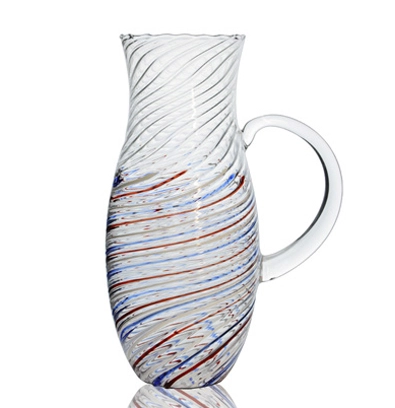
Handle design directly affects user comfort and the risk of product breakage. The handle needs to provide sufficient finger space and maintain good grip and balance when the kettle is full.
Details to focus on include:
Distance between the handle and the kettle body
Width and curvature of the gripping position
Area and structure of the upper and lower connection points
Center of gravity distribution between the kettle body and the handle
Adaptability to different hand types
For handmade glass products, buyers should also pre-determine the allowable tolerance for the handle position and angle. Slight handmade differences can reflect product characteristics, but obvious skewing, uneven connections, or unstable centers of gravity will affect appearance and function.
The lid can significantly change the market positioning of a kettle. Common materials include glass, stainless steel, silicone, bamboo wood, and combinations of various materials.
Ordinary drinking water kettles may only require a simple lid, while tea, fruit water, and infused beverage kettles may require integrated filtration structures.
Buyers should evaluate:
Lid fit and stability
Ease of disassembly and cleaning
Filter hole size
Pouring performance with the lid installed
Contact state between the lid and the glass kettle mouth
Whether the lid easily loosens when pouring
Appearance changes after multiple cleanings
Components made of different materials need to be evaluated as a complete product because the lid and glass kettle body may have different cleaning and maintenance requirements.
Glass thickness affects product appearance, weight, grip, and production consistency. Thicker glass can create a more solid visual effect but also increases transport weight and makes the kettle heavier when full.
Thinner kettle walls can create a lightweight and delicate appearance, but its structure still needs to meet target capacity and daily use requirements.
Buyers should not assume that thicker glass necessarily means higher quality. Compared to simply increasing thickness, uniform wall thickness, stable kettle bottom, smooth structural transitions, and rounded kettle mouth treatment are usually more important.
During sample inspection, focus should be on whether there are issues like uneven wall thickness, obvious deformation, unstable bottom, overly thick local areas, or overly thin transition regions.
Compared to ordinary soda-lime glass, borosilicate glass has a lower thermal expansion coefficient, thus providing better adaptability in environments with temperature changes. Relevant data shows that the expansion degree of borosilicate glass after heating is about one-third that of ordinary soda-lime glass.
But for bulk buyers, simply confirming that the product uses borosilicate glass is not enough. They also need to comprehensively consider beverage temperature, glass formula, kettle wall structure, manufacturing quality, and product usage instructions.
Buyers should clarify:
Whether the product is suitable for hot beverages
Recommended temperature range for use
Whether direct heating is allowed
Whether it is suitable for dishwashers or microwaves
Whether to avoid rapid temperature changes
Which usage and cleaning instructions should be marked on the packaging
Even heat-resistant glass is not unbreakable. Rapid temperature changes and physical impacts can still cause product damage.
Customization can help brands escape homogenized competition and avoid products being compared solely on price.
Borosilicate glass kettle suppliers can typically offer:
Transparent or colored glass
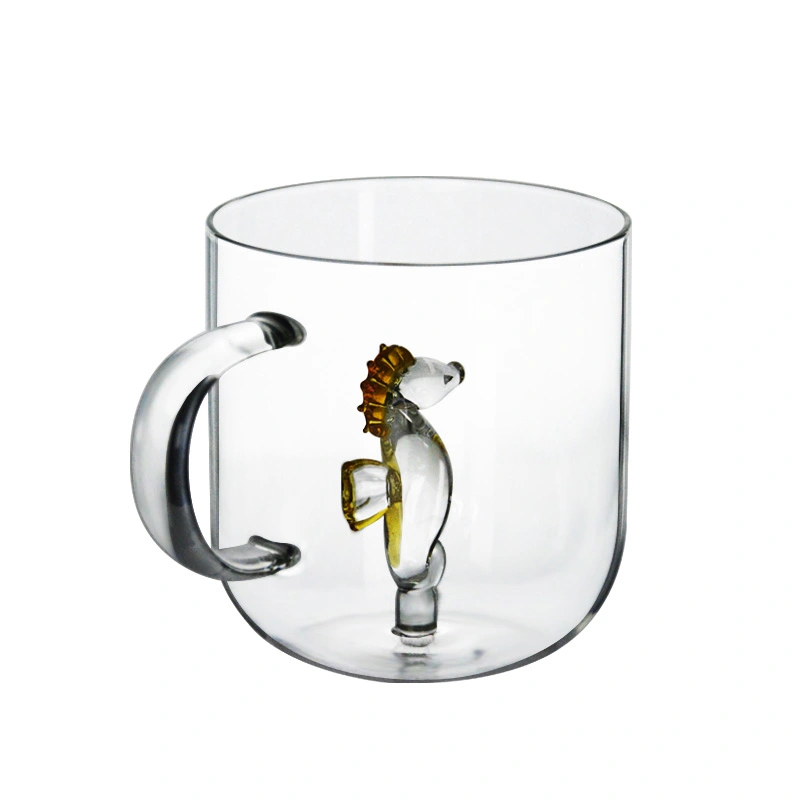
Colored handles and decorative parts
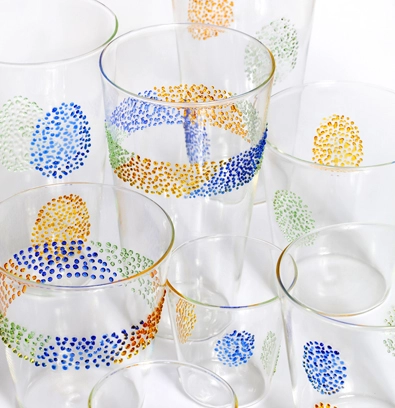
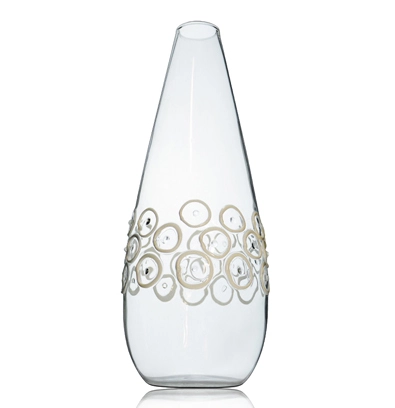
Glass dots or internal decorative shapes
Printed or engraved logos
Decals and surface patterns
Custom lids
Gift boxes and brand packaging
Decoration processes should match brand positioning and expected cleaning conditions. Buyers need to confirm color tolerance, logo position, wear resistance, and final sample effect before mass production.
For handmade colored decorations, it is also necessary to determine acceptable visual standards, as slight differences may exist between different products.
Packaging is an important part of the actual product cost. If protection is insufficient, even if the unit price of the product is very low, the overall cost may increase due to damage, claims, replenishment, and retail launch delays.
Packaging design needs to consider:
Kettle shape and handle protrusion
Product weight
Lid and accessory configuration
Single item or set packaging
E-commerce delivery or retail transport
Export carton size
Pallet loading requirements
Dividers, molded trays, foam, paper supports, or other protective structures should prevent the product from moving inside the box and avoid glass-to-glass collisions. Buyers should also request that suppliers provide clear outer carton markings and complete packaging specifications.
Before confirming bulk orders, do not just compare quotes. Buyers also need to assess suppliers' sample development capabilities, size control capabilities, decoration consistency, finished product inspection capabilities, and export packaging design capabilities.
Topglass's customization process covers product design, material selection, forming, annealing, secondary processing, and quality control, providing a more complete development foundation for both standard and custom kettle projects.
A complete inquiry should include capacity, purchase quantity, target market, lid requirements, color, logo, packaging form, and expected delivery date. Clear product specifications can help manufacturers accurately assess feasibility and reduce subsequent repeated modifications.
Bulk purchasing borosilicate glass kettles requires balancing appearance, pouring performance, capacity, material, customization, quality consistency, and logistics transportation.
By comparing the above eight key points before placing an order, buyers can find products that better meet the target customer, sales channel, and brand positioning. Sufficient sample testing and clear specification confirmation can also reduce quality disputes, facilitating a smoother transition from product selection to mass production.